
Top 10 Power Tools for Home Improvement (2026)
Whether you're a weekend DIYer or a seasoned builder, having the right power tools makes all the difference. Here are our top 10 picks.
2026-02-01
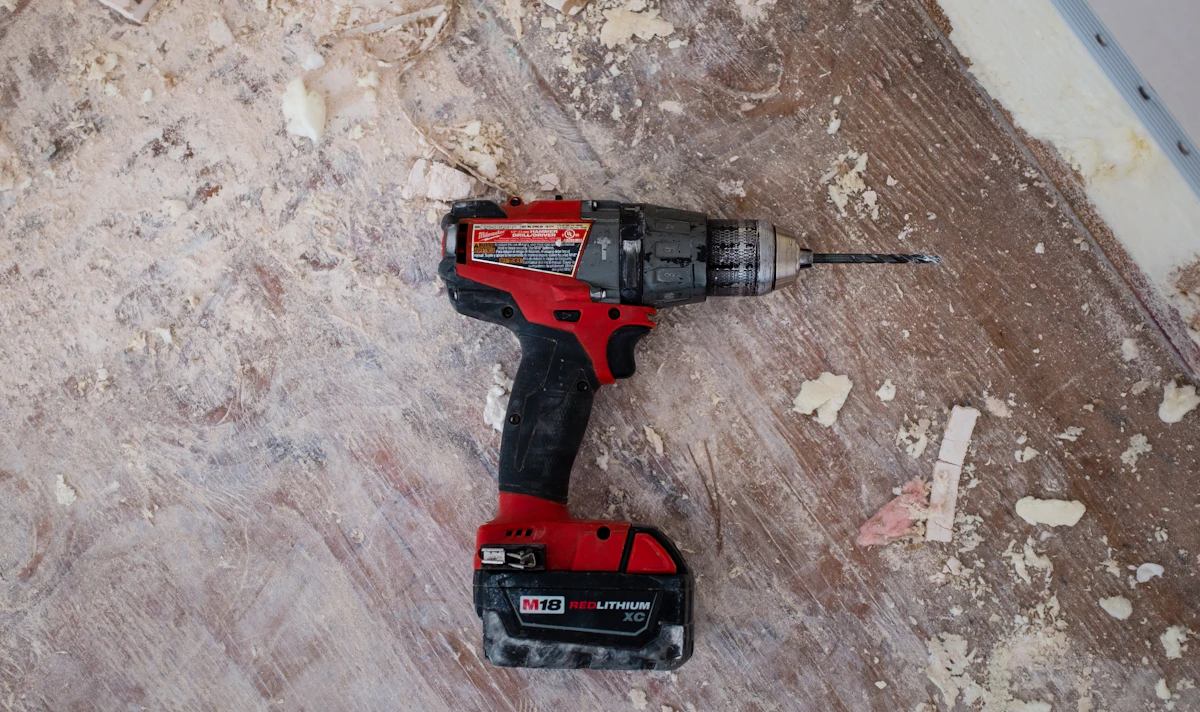
Walking into a hardware store without a plan is one of the most expensive mistakes a DIYer can make. Power tools span every price point and quality tier — and the wrong purchase can sit in your garage collecting dust for years. After months of hands-on testing across real home improvement projects, we've narrowed down the ten tools that genuinely earn their place in any home workshop.
How We Tested
Every tool on this list was used on at least three different home improvement tasks — from installing floating shelves and assembling flat-pack furniture, to cutting decking boards and drilling into brick. We scored each on:
- Performance — power, speed, and consistency under load
- Ergonomics — balance, grip, and vibration levels over extended use
- Durability — construction quality and brand warranty
- Value — feature-to-price ratio for a home workshop context
A note on brands: We've deliberately included tools from multiple ecosystems. If you're starting from scratch, picking one battery platform (e.g. DeWalt 20V MAX, Makita 18V LXT, or Bosch 18V) and sticking to it will save you money on batteries in the long run.
1. Cordless Drill/Driver
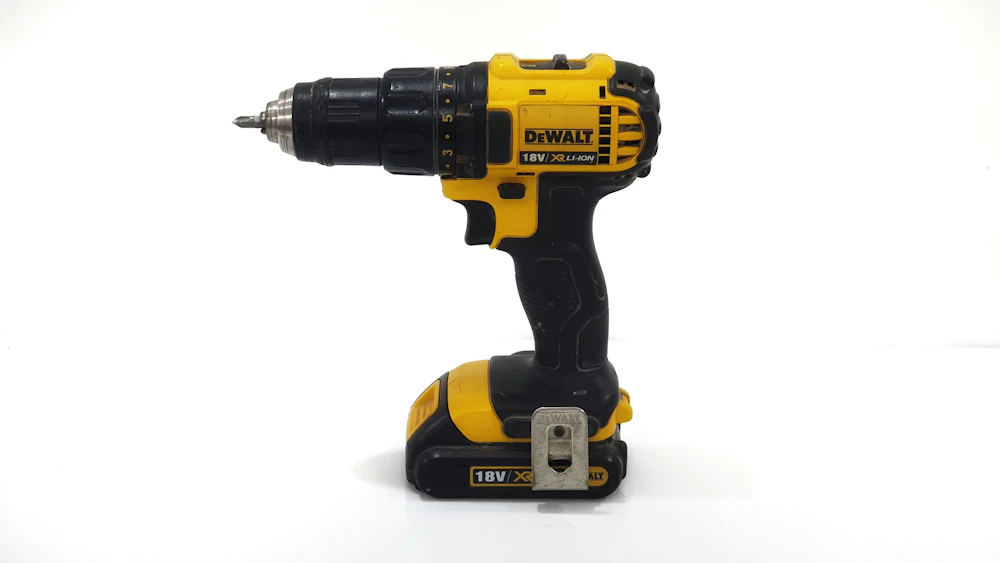
The single most versatile tool you'll own. A good cordless drill drives screws, drills pilot holes, and with a mixing paddle attachment, can even stir paint. Look for:
- At least 18V for sufficient torque on hardwood and masonry
- Two-speed gearbox — low gear for driving screws, high gear for drilling
- Keyless chuck (13mm minimum) so you can swap bits one-handed
- Belt clip — you'll thank yourself when working up a ladder
What to avoid: cheap no-name drills with brushed motors. They run hot on long jobs and tend to fail within 18 months of regular use. Branded brushless models cost more upfront but last significantly longer.
2. Circular Saw

For any project involving sheet material or timber lengths — flooring, decking, shelving panels — a circular saw is essential. A 165mm blade corded model is the sweet spot for home use: lighter and more manoeuvrable than a 185mm, with enough depth to cut through 45mm timber at 90°.
Key specs to check:
- Bevel capacity of at least 50° for angled cuts
- Dust extraction port (your lungs will thank you)
- Soft-start motor to prevent kickback on startup
💡 Tip: Always clamp your workpiece. One hand on the saw, one hand on a clamp — never use a hand to steady your material.
3. Jigsaw
Where the circular saw handles straight lines, the jigsaw handles curves, cut-outs, and awkward shapes. It's indispensable for:
- Cutting sink and hob openings in kitchen worktops
- Trimming door panels and skirting boards around obstacles
- Cutting shapes in plywood for shelving and storage projects
Look for orbital action (T-shank blade system) and a variable-speed trigger. Barrel-grip jigsaw models give significantly better control than top-grip designs for intricate work.
4. Random Orbital Sander

Painting, staining, or varnishing any wood surface without sanding first is the difference between a professional result and a job you'll redo in two years. A 125mm random orbital sander removes material quickly without leaving the parallel swirl marks of a belt sander.
Buy a pack of mixed-grit discs (80, 120, and 180 grit) and always finish with the finest grit before applying any finish.
Dust extraction matters: A sander without a vacuum port or bag will fill your workspace with fine particulate. Invest in one with a proper extraction system or connect it to a shop vac.
5. Multi-Tool (Oscillating Tool)
If there's one tool that surprises people with its usefulness, it's the oscillating multi-tool. The rapid back-and-forth blade motion lets it do things no other tool can:
- Undercutting door casings to fit flooring flush beneath them
- Cutting out rot in tight corners and internal window frames
- Removing old grout and silicone sealant
- Flush-cutting protruding nail and bolt heads
All major brands have moved to a universal-fit system (Starlock), so accessories are widely interchangeable. Buy a kit with a variety of blades — you'll find a new use every project.
6. Impact Driver
Often confused with a drill, the impact driver does one thing brilliantly: drives long screws and bolts with enormous force using a rotational hammering action. It's the go-to tool for:
- Decking construction (75mm+ screws into hardwood)
- Timber frame building
- Removing rusted or over-tightened bolts
An impact driver and a drill/driver are not interchangeable for all tasks. Drills are better for drilling holes; impact drivers are better for heavy fastening. Ideally, own both.
7. SDS Rotary Hammer Drill
For anything involving masonry, brick, or concrete, a standard drill — even on hammer mode — is painfully slow and burns out bits quickly. An SDS drill uses a dedicated hammering mechanism separate from the chuck rotation, delivering far more percussive force per strike.
A SDS-Plus (not SDS-Max) is the right choice for home use. It's lighter and still handles holes up to 16mm in brick and 26mm with a core bit for plumbing and electrical runs.
8. Track Saw

Once considered pro-only equipment, track saws have come down in price significantly. If you regularly cut sheet material (plywood, MDF, melamine boards), a track saw gives table-saw accuracy from a portable tool. The guide rail ensures perfectly straight cuts every time, and the anti-splinter strip gives you clean edges on laminated boards.
Festool pioneered this category, but budget-friendly alternatives from Makita and Triton perform excellently for workshop hobbyists.
9. Cordless Brad Nailer
The manual approach to trim work — hammering small finish nails and setting them with a nail punch — is time-consuming and risks bruised fingers and dented wood. A brad nailer drives 18-gauge nails with a single trigger pull, leaving a near-invisible hole.
Perfect for:
- Attaching architrave and skirting boards
- Installing cabinet trim and beading
- Assembling lightweight timber boxes and frames
10. Laser Level
Not a power tool in the traditional sense, but arguably the most time-saving device on this list. A self-levelling cross-line laser replaces the manual process of marking level lines with a spirit level and chalk line.
For hanging a run of shelving, tiling a bathroom, or installing a row of picture hooks, a laser level halves the setup time and eliminates the frustration of discovering a wonky result after everything is mounted.
Look for a model that projects both horizontal and vertical lines simultaneously, with a magnetic base for attaching to surfaces at any angle.
Summary Table
| # | Tool | Best For | Budget Pick | | --- | ---------------------- | ------------------------------------ | ------------------ | | 1 | Cordless Drill/Driver | General purpose fastening & drilling | Ryobi ONE+ 18V | | 2 | Circular Saw | Sheet goods & long timber cuts | Makita DHS680 | | 3 | Jigsaw | Curves and internal cut-outs | Bosch PST 900 | | 4 | Random Orbital Sander | Surface prep before finishing | Bosch PEX 220 | | 5 | Oscillating Multi-Tool | Tight spaces, grout, flush cuts | Dremel MM35 | | 6 | Impact Driver | Heavy fastening, decking | Milwaukee M18 FQID | | 7 | SDS Rotary Hammer | Masonry and concrete drilling | DeWalt D25033K | | 8 | Track Saw | Precision sheet material cuts | Makita SP6000J | | 9 | Cordless Brad Nailer | Trim, skirting, architrave | Ryobi ONE+ P320 | | 10 | Laser Level | Layout and alignment | Bosch GLL 3-80 |
Building Your Kit: Where to Start
If you're buying your first set of power tools, don't buy everything at once. Here's the order we'd recommend:
- Cordless drill/driver — you'll use it on every project
- Random orbital sander — if you plan any painting or refinishing
- Circular saw or jigsaw — depending on whether you make more straight or curved cuts
- Oscillating multi-tool — once you tackle your first flooring or trim project, you'll wonder how you lived without it
- Everything else — buy as specific projects demand it
All pricing and availability is subject to change. Links on this page are affiliate links — purchasing through them supports Aribuilds at no extra cost to you.